The choice most Baltimore supers face is jobsite unit versus event unit. A construction unit is a recirculating, non-flush model with a urinal, a heavy-duty door latch, and interior surfaces meant for muddy boots and…
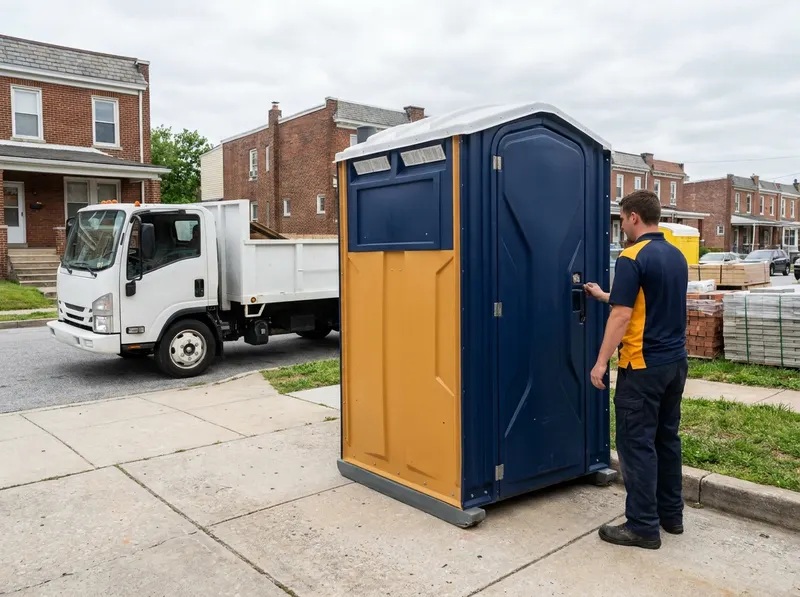
The choice most Baltimore supers face is jobsite unit versus event unit. A construction unit is a recirculating, non-flush model with a urinal, a heavy-duty door latch, and interior surfaces meant for muddy boots and drywall dust — it is the cheaper, tougher option and the right one for framing, roofing, excavation, and interior gut jobs. A flushing or trailer-style restroom looks better for a ribbon cutting or an open house, but it costs more per week, needs more service attention, and gets beat up fast on a live site. If hard hats are using it daily, the standard construction unit is the better value; save the upgraded units for the days the public shows up.
Sizing follows the OSHA construction sanitation rule (29 CFR 1926.51), which calls for at least one toilet for crews of 20 or fewer and additional fixtures as headcount climbs. In practice, one unit covers a small rowhouse rehab crew in Federal Hill or Remington; a 25–40 person site in Locust Point or a Curtis Bay industrial project usually needs two units plus a separate hand-wash station. Add the second unit before the crew doubles, not after — trades notice a dirty, overloaded unit immediately, and service frequency is what keeps it from getting there. Standard cadence is one service visit per week; sites with heavy traffic, summer heat, or long shifts do better on twice weekly.
Access is the real variable in Baltimore City, which is an independent city with its own right-of-way rules rather than part of Baltimore County. Canton and Fells Point alleys, the one-way blocks around Federal Hill, tight infill lots in Hampden and Charles Village, and the grades up toward Mount Washington all change where a unit can physically sit. A service truck needs a straight approach and overhead clearance, but a unit can be carried a short distance from the truck to the back of a lot or through a gate. Highlandtown and Locust Point yards are usually simple; gated industrial sites just need a contact and hours. If the only spot is the street or sidewalk, the city may require a right-of-way or barricade permit — tell us early and we will place around it. We deliver and service our own routes, so the person you talk to is the person who knows your gate code.
Billing stays boring on purpose. Delivery, weekly service, and pickup are quoted as one rental-period number before anything rolls, so nothing new appears on the invoice at the end of the job. Extended jobs simply continue at the monthly rate — no re-delivery fee for keeping the unit past week four. Extra units mid-project are added on the next available run. Winter matters too: cold weather thickens tank contents, so December-through-February sites in Baltimore get a heavier deodorizer charge and, where needed, an adjusted service window. Nobody notices the restroom — that is the whole goal on a jobsite.
Every job gets a firm, written price after a free on-site visit.
Tell us about your construction site porta potty rental job in Baltimore and we'll send a clear, written quote — usually the same day.
 FiveStar Restrooms Solutions