Flushable units make sense when the restroom is part of the guest experience or the rental runs long. A 120-guest reception in a Canton rowhouse backyard, a wedding on a Fells Point pier deck, a church picnic in…
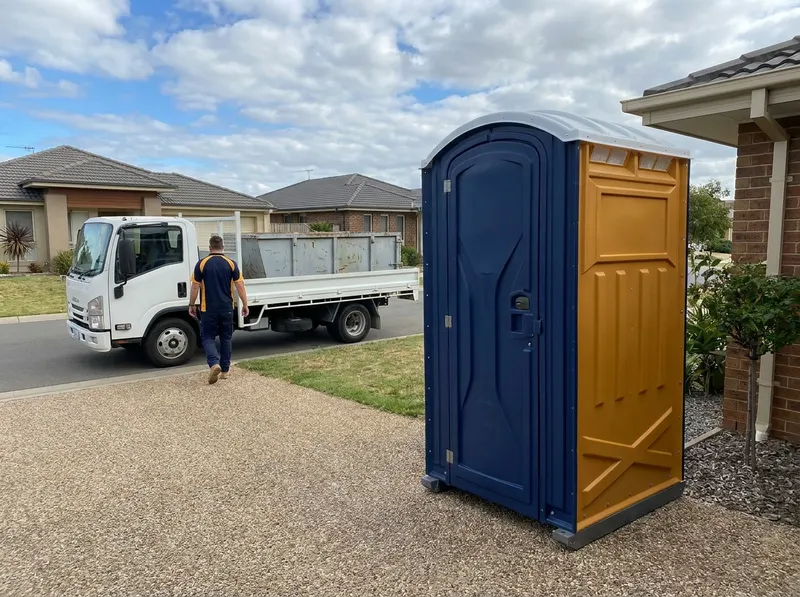
Flushable units make sense when the restroom is part of the guest experience or the rental runs long. A 120-guest reception in a Canton rowhouse backyard, a wedding on a Fells Point pier deck, a church picnic in Patterson Park, a family reunion under the trees in Druid Hill Park — in all of those, the flush bowl and hand-wash are what keep the restroom from becoming the thing everybody talks about. The trade-off is honest: a flush model costs more than a standard unit, it arrives heavier because of the freshwater reservoir, and on a heavily used long-term rental it needs service more often, not less, because that freshwater has to be refilled. If you have a five-man framing crew on a Remington gut-rehab and nobody's dressing up, a standard non-flush unit does the job for less money. If you're hosting, or if the unit sits where clients and inspectors walk past it, spend the difference.
Access is the part worth talking through before delivery day, because Baltimore's older blocks were not built for our trucks. Canton, Federal Hill, Locust Point, Highlandtown, and Fells Point are full of rowhouse rear alleys with parked cars, low utility lines, and gate openings tighter than people remember. Hampden and Charles Village add the same alley math plus alley-load garages. Mount Washington backyards are often steep or terraced. We ask for gate width, the surface the unit will sit on, and any overhead clearance before we route the truck — and if the only workable spot is 60 feet from where we can park, tell us, because there are limits on how far a flush unit can be walked and we would rather solve it on the phone than on your street. We deliver our own units with our own drivers, so the person answering your access questions is the person who has to make it fit.
Placement matters more with flush models than with basic units. A full flush unit is heavy and needs firm, level ground — gravel, pavers, asphalt, or compacted dirt beats soft spring turf every time, especially on the low-lying ground near the Inner Harbor or a yard that just drained after two days of rain. Level placement also protects the flush pump and keeps the door swinging correctly. If your only option is grass, we can often set the unit on the flattest available line and check it during service. For units going on a public sidewalk, parking lane, or street — common near Camden Yards, M&T Bank Stadium, or a Curtis Bay industrial frontage — a right-of-way or occupancy permit may be required by Baltimore City, which is an independent city with its own permitting separate from Baltimore County. Confirm permit requirements with the city before your date; we'll place the unit wherever you're cleared to put it.
On service, the schedule is set up front, not improvised. Weekend events are typically delivered ahead of the date and picked up after, with no mid-event service needed for normal guest counts. Longer rentals get a recurring visit where we pump the waste tank, refill freshwater, test the flush pump, wash the interior, and restock paper. If the event grows or the job runs three weeks past the original schedule, call and we'll add units or extend — extra units and extra weeks are a conversation, not a penalty. If your date moves, tell us as early as you can and we'll re-slot the delivery window. That's the whole promise here: nobody notices the restroom.
Every job gets a firm, written price after a free on-site visit.
Tell us about your flushable porta potty rental job in Baltimore and we'll send a clear, written quote — usually the same day.
 FiveStar Restrooms Solutions