Monthly rental is the right call the moment a job outlives a single week. A kitchen-and-bath gut in Hampden that runs eight weeks, a rowhouse rehab off Fort Avenue in Locust Point, a sewer or paving stretch in…
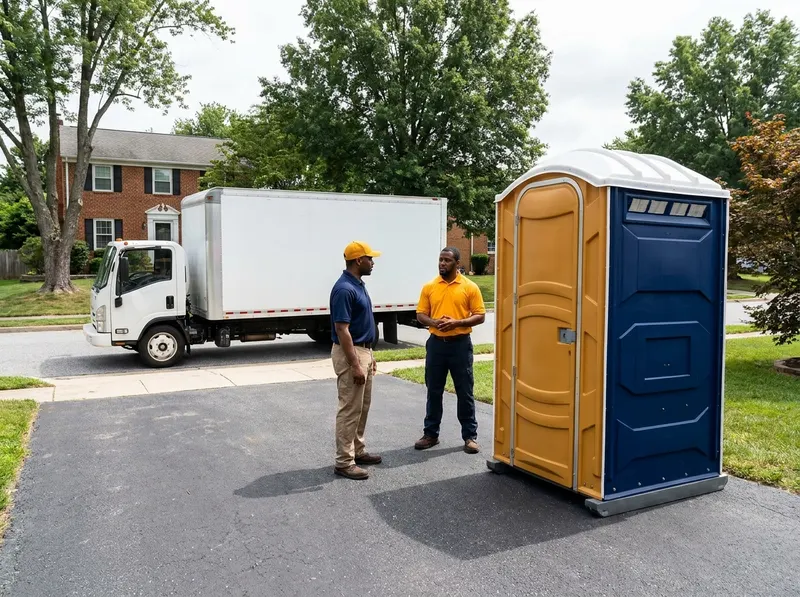
Monthly rental is the right call the moment a job outlives a single week. A kitchen-and-bath gut in Hampden that runs eight weeks, a rowhouse rehab off Fort Avenue in Locust Point, a sewer or paving stretch in Highlandtown — all of those cost less per day on a monthly agreement than on repeated short rentals, because the delivery and pickup happen once instead of every few days. The trade-off is honest: a monthly unit needs a truck to reach it on a fixed day, every week. If your site is a driveway that gets blocked by a dumpster on Tuesdays, or a Canton block where the alley fills with contractor trucks by 8am, tell us and we will set the service day around it. A missed service visit is how a long-term unit turns into the thing everybody notices — and our whole standard is that nobody notices the restroom.
Daily or weekend event rental is the better fit for a one-off — a graduation party in Charles Village, a church picnic at Druid Hill Park, a festival near the Inner Harbor. Those get delivered, used, and pulled inside 72 hours with no service cycle. Monthly is for the job with a permit posted in the window and a crew of 8 to 20 showing up every morning. If you genuinely do not know how long the work will last, start monthly: extending is a phone call, and early pickup is easier to arrange than trying to stretch a short-term drop into a project timeline.
Baltimore access is the real variable in long-term placement, and it is worth ten minutes on the phone before delivery. Baltimore City is an independent city with its own right-of-way rules, so a unit sitting on a public street, sidewalk, or parking lane may require a city permit — that is on the property owner or GC to confirm, and we will tell you plainly when we think you need one. Rear alleys in Federal Hill and Fells Point are tight and often have low utility lines; on those blocks we usually place inside the yard or on the parking pad rather than the alley itself. Remington and parts of Mount Washington add grade, so we look for a level pad — a unit on a slope drains poorly and doors swing wrong. Curtis Bay and other industrial sites are usually the easiest access we see, with room to set the unit where the truck can reach it without backing 200 feet. Anywhere near Camden Yards, M&T Bank Stadium, or Patterson Park, we also plan the service visit around game days and event traffic instead of pretending they don't exist.
Two things we handle differently than a broker would. First, we are local and we do our own delivery and service — the person who scouts your placement is with the same outfit that shows up to pump it. Second, the monthly quote includes the recurring service, so delivery, pickup, and scheduled visits are talked through before the unit lands rather than appearing on a later invoice. Need a second unit when the crew doubles, or an extra service visit during drywall week? Call and it gets added to the existing route, not rebuilt as a new order. Winter matters too: units stay usable through Baltimore freezes, and cold-weather deodorizer is part of the service on long-term rentals.
Every job gets a firm, written price after a free on-site visit.
Tell us about your monthly long-term portable toilet rental job in Baltimore and we'll send a clear, written quote — usually the same day.
 FiveStar Restrooms Solutions